
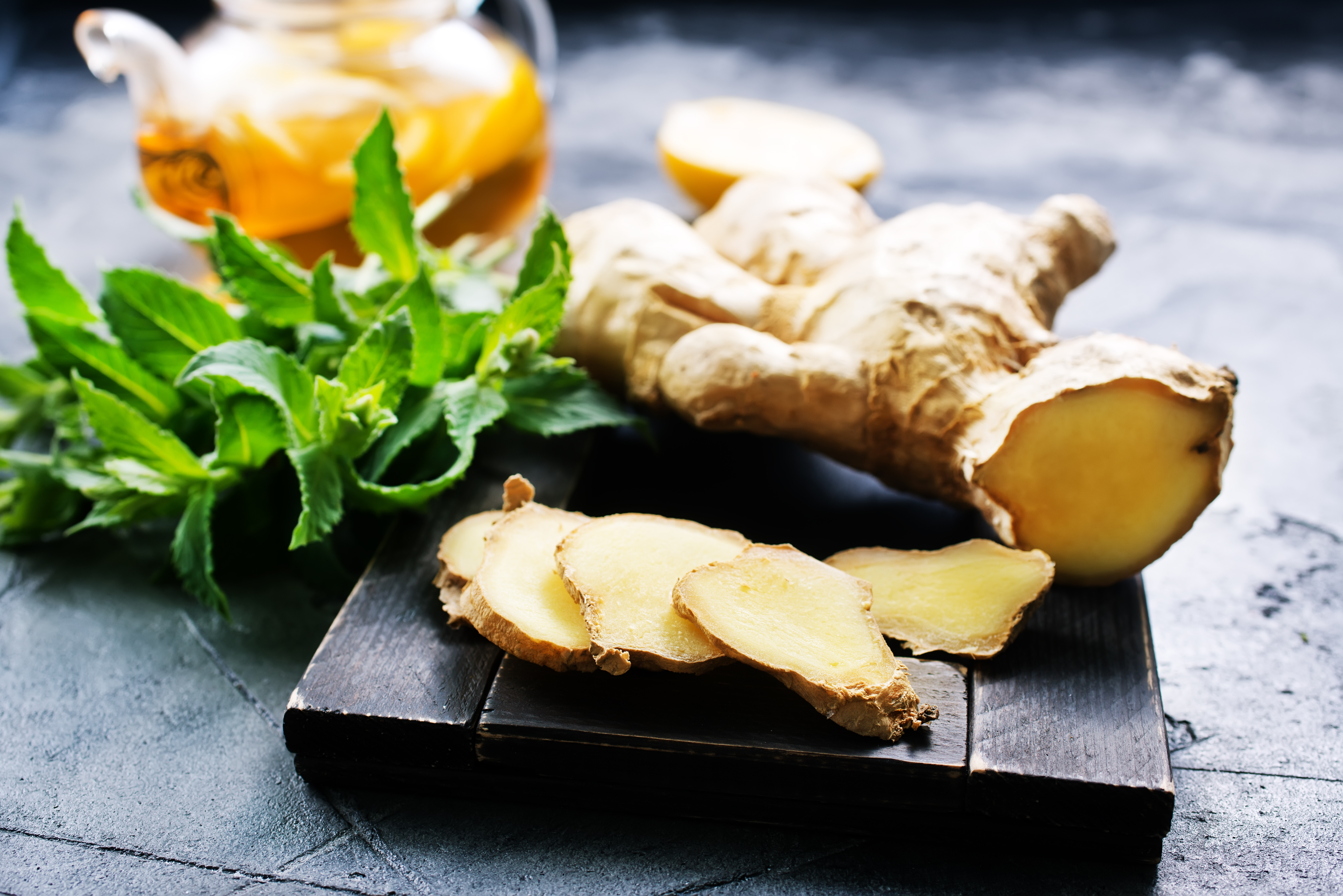
Are you somebody who constantly suffers from bloating, stomach pains, digestive upset, and irregular bowel movements? Then you have certainly come to the right place.
The simple reality is that the way we eat greatly affects our digestive health, and if we eat the right foods, we can improve our digestive health to the point where we no longer have to suffer stomach upsets and other such digestive woes.
Today, we’re here to take a closer look at exactly how both ginger and peppermint can help keep digestive woes at bay.
We’ll take a look at the individual digestive benefits of both peppermint and ginger, and then talk about how you can use them to relieve those stomach pains, gas, bloating, and more.
How Does Ginger Relieve Digestive Upset?
First we have ginger, a root that is often used in cooking, but also has many other benefits. Ginger has often been touted for its medical benefits and therapeutic effects, with its anti-nausea properties being one of them.
Relieving Nausea
It’s well known for being able to relieve a variety of types of nausea, whether caused by morning sickness or motion sickness. It appears to act on the central nervous system and the digestive tract, therefore reducing the urge to vomit and nausea in general.
Stimulating Digestion
Ginger is also extremely rich in a variety of compounds such as shogaol and gingerol, both of which help to stimulate a variety of digestive enzymes, bile, and saliva, therefore helping your stomach and digestive tract break down food much more quickly and efficiently. At the same time, ginger is well known for helping to relieve indigestion, gas, bloating, and more.
Anti-inflammatory
Furthermore, if you happen to have any kind of inflammatory bowel disease or acid reflux, then ginger can also benefit you because it has great anti-inflammatory properties. Those anti-inflammatory properties aren’t just good for your digestive system either.
Overall Gut Health Benefits
There is also some research which shows that ginger may even be able to help prevent stomach ulcers from occurring, while simultaneously promoting the relief of constipation.
The reason for this is because ginger contains a whole lot of dietary fiber that not only promotes regular bowel movements, but also helps to absorb bad cholesterol in your system, therefore also benefiting your heart health.
Ginger even has a modulating effect on the motility of your gut, which means that you end up digesting your food much more efficiently overall. There is also the fact that ginger is antimicrobial and anti-inflammatory in nature, both of which can be very beneficial for the health of your digestive system.
How Does Peppermint Relieve Digestive Upset
Peppermint, a naturally occurring herb, is not only popular for its aroma and flavor, but also for its variety of potential health benefits, especially in relation to your digestive health.

Antispasmodic
First and foremost, peppermint oil contains something known as menthol, which has what is known as antispasmodic properties. Antispasmodic properties mean that peppermint oil helps to relax the muscles in your digestive tract. This can in turn help relieve abdominal cramps, gas, and bloating.
On that note, the active compounds and the aroma of peppermint are also known for helping to relieve feelings associated with nausea, which is true whether we are talking about chemotherapy, motion sickness, or pregnancy.
Anti-Inflammatory
Peppermint is also known for being a great anti-inflammatory agent, which can help relieve a wide variety of symptoms related to the digestive tract, especially when it comes to the diarrhea, bloating, pain, and constipation often associated with issues such as irritable bowel syndrome, ulcerative colitis, and even Crohn’s disease.
Overall Gut Health
Peppermint also has various other effects on the gut, including having a very soothing effect on the lining of the gut, therefore helping to relieve discomfort and irritation that may be associated with digestive issues.
At the same time, peppermint oil can also help modulate the motility of your gut, which can help promote more regular digestion while also reducing spasms.
On that note, due to the various antimicrobial properties of peppermint oil, it may also help increase the gut flora in your system, which helps to support overall digestive health while reducing the risk of infections.
How to Use Ginger to Relieve Stomach Discomfort
Not everybody likes the taste of ginger, so you may not want to eat it outright, especially not if it is raw. However, ginger is a popular addition in many Asian dishes, which means that if you like to cook, you could always incorporate ginger into your cooking.
However, if this is not for you, you could always make a smoothie with ginger. All you have to do is to take your favorite smoothies, such as banana strawberry for instance, and add a few tablespoons of freshly ground ginger. That should be more than enough for you to reap the benefits of it.
Then again, not everybody likes smoothies, which means that making ginger tea could be right for you, although if it comes to your digestive health, we would recommend making a combination of ginger and peppermint tea, which we will discuss below.

How to Use Peppermint to Relieve Digestive Discomfort
As far as using peppermint to relieve digestive discomfort is concerned, it’s a little harder to use than ginger, mainly because it’s just a herb, not a spice and or aromatic used for cooking. You could always just eat raw peppermint leaves, and this would work perfectly fine.
Furthermore, there are also food grade peppermint oils out there that you can simply ingest along with your favorite drinks.
With that being said, everybody enjoys a good glass of steaming hot and slightly sweetened peppermint tea, which brings us to the final section of today’s critical, combining peppermint and ginger for the ultimate and digestive relief.

Combining Peppermint and Ginger for the Ultimate in Digestive Relief
If you want to combine peppermint and ginger for the ultimate in digestive relief, we recommend making a tea out of them. This is perhaps the easiest way to go.
Realistically, you could most likely find some ginger and peppermint tea ready to go in your local grocery stores, although the benefits of these are quite limited, because those ingredients aren’t very fresh. You’re much better off making your own fresh peppermint and ginger tea.
So, you’re going to need some fresh tea bags or a tea strainer. You’re then going to put around one to two tablespoons of either fresh or dried peppermint inside of it, along with up to one or two tablespoons of ground ginger.
Generally speaking, the fresher these items are, the bigger the benefits will be. Therefore, we recommend using both fresh ginger and fresh peppermint.
Simply pour the boiling water over the peppermint and ginger and let it steep for up to 10 minutes. If you’re not a big fan of the flavor, you can always sweeten your ginger and peppermint tea using some honey.
Final Thoughts
The bottom line here is that you don’t have to keep suffering from digestive discomfort, especially not when natural remedies like peppermint and ginger are here to help. Try combining the two together into a warm and soothing tea, and you’ll see just how fast your digestive discomfort will be relieved.


Leave a Comment